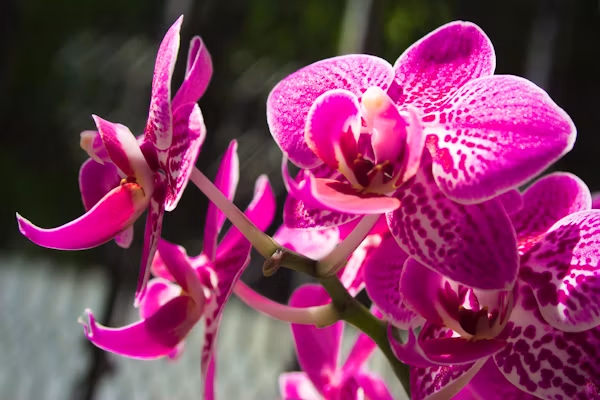
The Orchid: History, Biology, and Global Diversity
The orchid family (Orchidaceae) is one of the two largest families of flowering plants, alongside Asteraceae. Comprising over 28,000 accepted species across more than 700 genera, orchids represent one of the most evolutionarily advanced and diverse plant families on Earth, famous for their complex geometric blooms, specialized pollination strategies, and exotic beauty.
1. History and Origin
Ancient Origins: Fossil evidence suggests that the ancestral origins of orchids date back to the Late Cretaceous period, around 80 million years ago, co-existing with dinosaurs and early pollinators.
Cultural History: In ancient Greece, orchids were associated with virility and fertility (the name Orchis comes from the Greek word for testicle, referring to the shape of paired root tubers). In traditional Chinese culture, orchids were revered by Confucius as symbols of moral integrity, refined elegance, and scholarly retreat.
Orchidomania (Victorian Era): During the 19th century, wealthy European collectors sparked a frenzy known as Orchidomania. Professional plant hunters traveled to remote tropical jungles in South America and Southeast Asia to harvest rare wild specimens, often enduring severe hardship to supply exclusive private greenhouses across Europe.
2. How the Orchid Emerges & Grows
Growth Habits (Epiphytic vs. Terrestrial):
Epiphytes: Over 70% of wild orchids are epiphytes, growing attached to trees or rocks rather than in soil. They use host structures for physical support, absorbing moisture and dissolved nutrients from air, fog, and rain via specialized aerial roots coated in a spongy white tissue called velamen.
Terrestrial: Found in temperate regions, these orchids grow directly in soil or leaf litter, utilizing underground tubers or rhizomes.
Bilateral Symmetry & Specialized Anatomy: Orchid flowers exhibit strict bilateral symmetry (zygomorphic). Their structural hallmark is the labellum (lip)—a modified petal that serves as a landing pad for specific pollinators. The reproductive organs (stamen and pistil) are fused into a single central structure called the column.
Microscopic Seeds & Mycorrhizal Symbiosis: Orchid seeds are microscopic ("dust seeds") and lack nutritional endosperm. In the wild, they cannot germinate without a symbiotic association with specific mycorrhizal fungi, which supply the developing seedling with essential sugars and nutrients.
3. Key Categories and Popular Varieties
While wild species exist across every continent except Antarctica, commercial breeding has produced over 100,000 hybrids tailored for home cultivation and floriculture:
Phalaenopsis (Moth Orchid): The most popular potted orchid worldwide, prized for long-lasting, flat blooms, ease of indoor care, and adaptability to typical household light and temperatures.
Dendrobium: A vast genus featuring upright, cane-like pseudobulbs that produce dense clusters of delicate flowers along the stem.
Cattleya: Celebrated for large, fragrant, vividly colored blossoms with ruffled lips—traditionally used in formal corsages.
Vanda: Renowned for striking blue, purple, and patterned blooms, often grown bare-rooted in hanging baskets due to their thick aerial root systems.
Cymbidium: Cold-tolerant orchids with tall spikes of waxy, long-lasting flowers, widely cultivated in temperate regions and used in cut-flower arrangements.
4. Global Locations and Ideal Conditions
Distribution: Orchids inhabit almost every terrestrial ecosystem on Earth, from tropical rainforests and cloud forests to alpine meadows and semi-arid regions. The highest concentration of species diversity occurs in the wet tropical regions of the Americas and Asia.
Cultivation Needs:
Growing Medium: Epiphytic orchids fail in standard potting soil; they require high-aeration media such as coarse pine bark, coconut husk chips, or sphagnum moss to prevent root rot.
Light & Humidity: Most cultivated varieties prefer bright, indirect sunlight and ambient humidity levels above 40–50%.
Watering: Orchids require a distinct "soak and dry" cycle, allowing airflow around the roots between waterings.