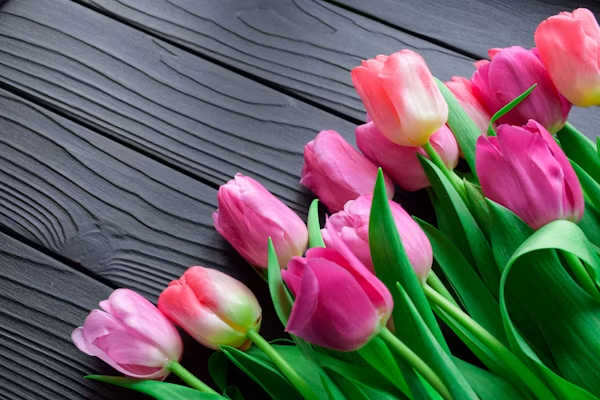
The Tulip: History, Varieties, and Global Phenomenon
The tulip (Tulipa) is a genus of spring-blooming perennial herbaceous bulbiferous geophytes. Renowned for its bold, symmetrical cup-shaped flowers and brilliant color range, the tulip carries a unique legacy that spans Central Asian steppes, Ottoman palaces, European financial manias, and modern global floriculture.
1. History and Origin
Central Asian Wild Origins: Tulips are native to the mountainous regions of Central Asia, including Tien Shan and the Pamir Mountains. Wild species grew naturally in harsh, semi-arid terrains with freezing winters and hot, dry summers.
Ottoman Cultivation: Nomadic tribes carried tulip bulbs westward into Persia and Anatolia. By the 10th century, tulips were widely cultivated by the Seljuks and later perfected by the Ottoman Empire. Sultans bred elegant, needle-petaled varieties (known as "Istanbul tulips"), making the flower a symbol of divine perfection, royal abundance, and paradise on Earth.
Tulip Mania in Europe: In the late 16th century, Carolus Clusius introduced tulips to the Netherlands via the Leiden Botanical Garden. During the Dutch Golden Age in the 1630s, intense demand for rare, broken-color tulip patterns led to Tulip Mania—one of history's first recorded speculative economic bubbles. At its peak, a single prized bulb like Semper Augustus could cost more than a luxury house in Amsterdam before the market abruptly crashed in February 1637.
2. How the Tulip Emerges & Grows
Bulb Structure: Tulips grow from underground bulbs containing stored energy, nutrients, and embryonic leaves. They require a mandatory cold dormancy period (vernalization) during winter to break dormancy and trigger spring development.
Growth Cycle: As soil temperatures rise in early spring, a single stem emerges along with broad, glaucous leaves. A solitary bloom typically forms at the apex of the stem, consisting of six tepals (three petals and three sepals that appear nearly identical).
Vegetative & Sexual Reproduction: While wild species reproduce via seeds, cultivated varieties are primarily propagated vegetatively through daughter offsets (bulblets) that form around the mother bulb. This ensures that offspring maintain the exact genetic traits and colors of the parent plant.
3. Key Categories and Varieties
Botanists and horticulturists categorize the thousands of registered tulip cultivars into 15 official divisions based on bloom structure, height, and flowering time:
Single Early & Late Tulips: Classic cup-shaped blooms on sturdy stems, ideal for spring borders and floral arrangements.
Darwin Hybrids: Famous for massive, weather-resistant flowers in intense shades of red, orange, and yellow.
Parrot Tulips: Featuring dramatic, deeply fringed, ruffled, and twisted tepals that resemble colorful tropical feathers.
Fringed & Lily-Flowered Tulips: Exhibiting distinct silhouettes with fine, lace-like edges or pointed, outward-curving petals.
Double (Peony-Flowered) Tulips: Packed with extra layers of petals, creating lush, multi-layered blooms resembling peonies.
4. Global Locations and Ideal Conditions
Climate Requirements: Tulips require temperate climates with distinct seasonal shifts—specifically cool, wet winters to cold-chill the bulbs and dry summers that allow the underground bulbs to rest without rotting.
Cultural Conditions: They demand full sun exposure and fertile, sandy, well-draining soil with a neutral to slightly acidic pH. Poor drainage leads rapidly to bulb rot.
Major Production Hubs: The Netherlands remains the undisputed world leader in commercial tulip production, exporting billions of bulbs annually and hosting famous displays at Keukenhof Gardens. Significant regional cultivation and flower festivals also take place in the United States (Washington, Michigan), Canada (Ottawa), Turkey, Kazakhstan, and Japan.