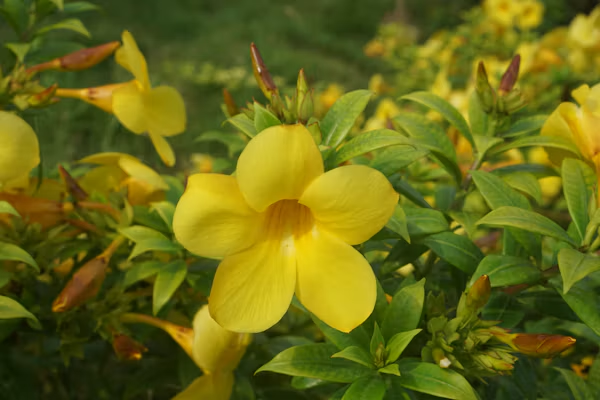
The Allamanda: History, Biology, and Tropical Splendor
The Allamanda (Allamanda), commonly known as the Golden Trumpet or Yellow Bell, is a genus of flowering woody shrubs and vines in the dogbane family, Apocynaceae. Celebrated for its expansive trumpet-shaped blossoms, glossy dark green foliage, and continuous blooming season, the Allamanda is a staple ornamental plant throughout tropical, subtropical, and warm landscape zones across the globe.
1. History and Botanical Naming
Neotropical Origins: Native to the tropical regions of Central America, South America, and the Caribbean, Allamanda species are particularly abundant in the rainforest margins, riverbanks, and coastal thickets of Brazil.
Botanical Naming: The genus was named by Carl Linnaeus in 1771 in honor of Dr. Frédéric-Louis Allamand, a Swiss physician and botanist who collected plant specimens in Suriname and Guiana during the late 18th century.
Ethnobotanical Applications: Historically, traditional healers utilized minor preparations of certain species as purgatives or emetics; however, modern medicine avoids internal use due to the plant's high toxicity and harsh gastrointestinal side effects.
2. Botanical Anatomy & Latex Defense Mechanism
Floral Architecture: The large, showy flowers feature a distinct trumpet- or funnel-form structure, opening into five broad, overlapping petal lobes. The throat of the flower often displays reddish-brown or orange nectar-guide streaks designed to direct tropical pollinators toward the interior.
Foliage Structure: Leaves are glossy, leathery, and dark green, typically arranged in whorls of three to five along the stems.
Toxic Milky Sap (Latex): Like many members of the Apocynaceae family (such as Oleander and Plumeria), all parts of the Allamanda plant contain a thick, milky white sap rich in iridoid lactones (such as allamandin). This sap acts as a chemical defense mechanism against herbivores, making the plant naturally deer-, rabbit-, and pest-resistant. If handled without gloves, the latex can cause contact dermatitis and skin irritation.
3. Key Species and Varieties
Horticulturists broadly cultivate several prominent species and hybrid cultivars:
Golden Trumpet Vine (Allamanda cathartica): The quintessential species, growing as a vigorous vining shrub that can climb 15 to 20 feet when supported. Produces large, brilliant yellow flowers spanning 4 to 5 inches across.
Bush Allamanda (Allamanda schottii): A compact, non-vining shrub that grows to a manageable height of 4 to 5 feet, producing an abundance of bright yellow flowers with dark orange-tinged throats.
Purple Allamanda (Allamanda blanchetii): A prized climbing species featuring striking violet, pink-purple, or reddish-brown trumpet blooms paired with slightly puberulent (downy) foliage.
'Cherries Jubilee': A popular hybrid cultivar known for its unusual brownish-pink to cherry-red blossoms, adding color variation to tropical gardens.
4. Global Locations and Ideal Conditions
Climatic Requirements: Allamanda thrives in tropical and subtropical regions (USDA Zones 10–11). It is extremely frost-sensitive and loses its foliage or suffers dieback if exposed to freezing temperatures.
Light Needs: Requires full sun exposure (at least 6 hours of direct daily sunlight) to maximize bud production and stem strength; plants grown in heavy shade become leggy and produce few flowers.
Soil & Moisture Requirements: Prefers rich, fertile, moist, well-draining soil with an acidic to neutral pH. High humidity and consistent moisture during peak growing season support dense flowering, though established plants exhibit moderate drought tolerance once mature.