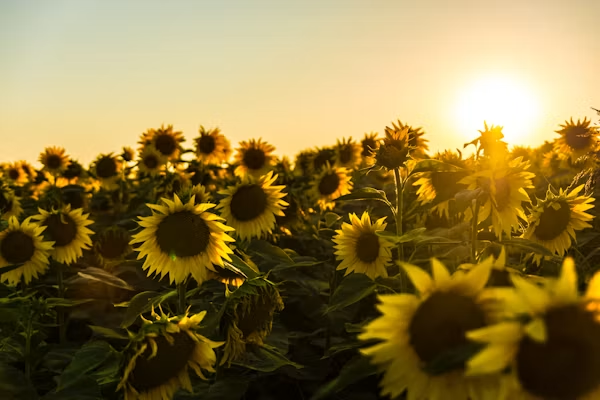
The sunflower (Helianthus annuus) is one of the world's most recognizable and economically vital agricultural crops. Renowned for its radiant golden petals and remarkable heliotropic behavior (tracking the sun), the sunflower encompasses a rich evolutionary history, diverse varieties, and a fascinating global distribution.
1. History and Origin
Ancient Roots: Native to the Americas, sunflowers were first domesticated over 4,000 years ago by Indigenous peoples in what is now the American Midwest and Southwest.
Early Cultivation: Long before maize cultivation became dominant in certain regions, sunflowers were cultivated for food, medicine, and oil. Archaeological evidence suggests they were grown as a crop as early as 3000 BCE—making them one of North America's earliest agricultural products. Indigenous communities ground the seeds into flour for bread, extracted oil for cooking, and used parts of the plant for ceremonial and medicinal purposes.
Global Spread: Spanish explorers brought sunflower seeds back to Europe in the 16th century as botanical curiosities. While initially grown for ornamental gardens, the crop gained major economic momentum in Russia during the 18th and 19th centuries, where selective breeding drastically increased its oil content, transforming it into a massive industrial commodity
2. How the Sunflower Emerged (Botanical Growth & Heliotropism)
Germination and Growth: A sunflower begins its life cycle when a seed germinates in warm soil. It develops a deep taproot system capable of reaching moisture far below the surface, making it resilient during dry spells.
The Heliotropic Dance: Young sunflowers exhibit heliotropism. Before their flower heads fully open, the bud tracks the sun from east to west every day, "resetting" overnight to face east by dawn. Once the flower fully matures and opens, it settles into a permanent eastward orientation, which helps warm the bloom and attract early-morning pollinators.
Pollination and Seed Production: The large central disk contains hundreds to thousands of individual florets. Once pollinated by bees and insects, each floret develops into a nutrient-rich seed packed with healthy fats, proteins, and essential vitamins.
3. Key Varieties
Sunflowers have been bred into dozens of cultivars tailored for specific uses—ranging from commercial agriculture to home gardening:
Oilseed Varieties: Grown primarily for commercial vegetable oil and birdseed. These typically feature smaller, black seeds with high oil content.
Confectionery Varieties: Grown for human consumption as snack seeds. These produce larger, striped seeds that are easily shelled and roasted.
Ornamental Varieties: Bred specifically for visual appeal in floral arrangements and gardens. Popular cultivars include:
'Teddy Bear': A fluffy, double-flowered dwarf variety resembling a golden pom-pom.
'Autumn Beauty': Features rich, multi-colored blooms in bronze, burgundy, and deep red.
'Mammoth Grey Stripe': The classic giant sunflower capable of reaching heights over 10 feet with massive seed heads.
4. Global Locations and Cultivation
Climate Requirements: Sunflowers thrive in temperate to warm climates with full sun exposure (at least 6 to 8 hours of direct sunlight daily) and well-draining soil. Their deep root systems make them moderately drought-tolerant.
Major Producers: Today, sunflowers are cultivated worldwide. The largest global producers include Ukraine, Russia, Argentina, China, and parts of the United States. They play a crucial role in international agricultural markets as a primary source of high-grade edible oil and livestock feed.