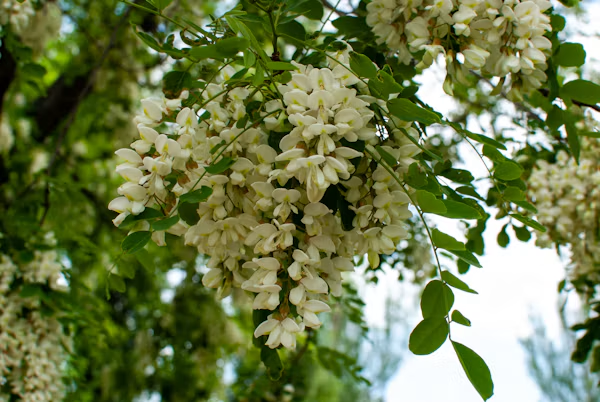
Acacia (Acacia), commonly known as wattle, is a vast genus of shrubs and trees belonging to the pea family, Fabaceae. Renowned for its golden pom-pom blossom clusters, extreme climate resilience, and vital ecological roles in arid ecosystems, acacia holds deep cultural, economic, and industrial significance worldwide.
1. History and Cultural Significance
Ancient Egyptian and Biblical Roots: Native to tropical and subtropical regions worldwide, acacia has been utilized by human civilizations for millennia. In ancient Egypt, acacia wood was used to craft furniture, coffins, and sacred boats, while the tree was associated with the tree of life in Egyptian mythology. In biblical traditions, shittim wood (derived from Acacia seyal) was specified as the construction material for the Ark of the Covenant.
National Symbol of Australia: Australia is home to the vast majority of true Acacia species. The Golden Wattle (Acacia pycnantha) is the official national floral emblem of Australia, celebrated every year on Wattle Day (September 1st) to mark the arrival of spring and new beginnings.
Indigenous Applications: Indigenous Australians historically harvested acacia seeds for food (bush tucker), ground them into flour, used the wood for weapons and boomerangs, and extracted gum and bark for medicinal remedies.
2. Botanical Structure & Environmental Adaptation
Inflorescence & Floral Structure: Acacia blossoms consist of dozens of tiny individual flowers packed tightly into fluffy, spherical pom-pom heads or cylindrical spikes. Their bright yellow or cream color comes from numerous long, protruding stamens rather than large petals.
Phyllodes vs. True Leaves: Many Australian acacia species adapt to harsh, arid climates through phyllodes—modified, flattened leaf stalks that function like leaves. Phyllodes have fewer stomata and thicker cuticles than true bipinnate leaves, significantly reducing water loss during heatwaves.
Nitrogen Fixation & Gum Production: Like many legumes, acacias form symbiotic relationships with Rhizobium bacteria in their root nodules, fixing atmospheric nitrogen into the soil. When wounded, several species secrete Gum Arabic (Acacia senegal), a water-soluble natural emulsifier and stabilizer widely used in pharmaceuticals, cosmetics, and the food industry.
3. Key Species and Regional Types
Taxonomic revisions divided the broad historical genus, but primary economic and ecological species include:
Golden Wattle (Acacia pycnantha): Native to southeastern Australia, featuring large, bright golden pom-pom flowers and broad, dark green phyllodes.
Gum Arabic Tree (Acacia senegal): Native to semi-desert regions of Sub-Saharan Africa (the Sahel region). It is the primary commercial source of high-grade gum arabic.
Silver Wattle (Acacia dealbata): Known in the European floristry trade as "Mimosa." It features silvery-grey feathery foliage and masses of fragrant yellow blossoms, widely grown in southern Europe for spring cut flowers.
Koa (Acacia koa): A large tree endemic to Hawaii, prized for its dense, richly figured, dark wood used in high-end musical instruments, furniture, and traditional canoes.
4. Global Locations and Growing Conditions
Distribution: Acacias are dominant across Australia, Africa, southern Asia, and the Americas. Australia hosts over 900 indigenous species, making it the global epicenter of acacia diversity.
Climate & Soil Needs: Acacias are light-demanding plants that require full sunlight (at least 6 hours daily). They are exceptionally drought-tolerant once established, thriving in lean, sandy, or rocky, well-draining soils with low nutrient levels.
Ecological Stewardship: While crucial for soil restoration and combating desertification, certain fast-growing species (such as Acacia saligna and Acacia mearnsii) have become invasive species in Mediterranean-climate regions outside their native ranges, requiring active management.