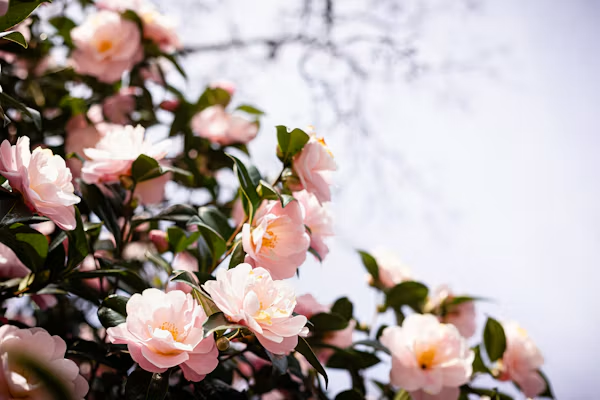
The Camellia: History, Biology, and Global Heritage
The camellia (Camellia) is a genus of flowering evergreen shrubs and trees in the tea family, Theaceae. Celebrated for its lush, symmetrical blooms, glossy foliage, and immense economic value as the source of true tea, the camellia stands as a cornerstone of East Asian culture, global agriculture, and winter-to-spring horticulture.
1. History and Cultural Significance
East Asian Origins: Native to East and Southeast Asia—spanning China, Japan, Korea, and the Himalayas—camellias have been cultivated for over 1,000 years. In ancient China, camellia species were grown both for ornamental beauty and for oil extraction from their seeds.
The Global Powerhouse of Tea: The most economically vital species in the genus is Camellia sinensis, the plant from which all traditional teas—including black, green, oolong, white, and pu-erh teas—are harvested.
Imperial Reverence & Western Arrival: In Japan, where it is known as Tsubaki, the camellia was historically associated with the samurai class and divine elegance. German botanist Georg Joseph Kamel studied the plant in the late 17th century, leading Carl Linnaeus to name the genus Camellia in his honor. By the 18th and 19th centuries, camellias became prized luxury greenhouse plants across Europe and America, inspiring Alexandre Dumas's classic novel The Lady of the Camellias.
2. Botanical Structure & Flowering Mechanics
Evergreen Structure & Foliage: Camellias are long-lived, slow-growing shrubs or trees with thick, leathery, dark green leaves featuring finely serrated margins. The thick leaf cuticle protects the foliage from winter frosts.
Flower Anatomy: The blooms feature soft, overlapping petals surrounding a central ring of prominent yellow stamens. Colors range from pure white and soft pink to deep crimson and variegated stripes.
Cool-Season Blooming: Unlike most flowering shrubs that bloom in late spring or summer, many ornamental camellia species bloom during late autumn, winter, or early spring, bringing vivid color to gardens when most other plants are dormant.
3. Key Species and Horticultural Forms
Botanists classify hundreds of wild species and thousands of registered cultivars, with primary focus on several standout species:
Tea Plant (Camellia sinensis): Grown commercially across Asia, Africa, and South America for its tender young leaf shoots, which are harvested and processed into tea.
Japanese Camellia (Camellia japonica): The quintessential ornamental species, producing large, formal, double or single blooms in late winter and early spring.
Sasanqua Camellia (Camellia sasanqua): A hardier, sun-tolerant species that flowers earlier (autumn to early winter) with fragrant, delicate single or semi-double blooms.
Net-Veined Camellia (Camellia reticulata): Native to Yunnan, China, famous for producing massive, dinner-plate-sized blooms on tree-like shrubs.
4. Global Locations and Ideal Conditions
Climatic Requirements: Camellias thrive in warm temperate to subtropical environments (USDA Zones 7–10). They prefer shelter from harsh, drying winds and direct afternoon sun.
Soil Requirements: Camellias are acid-loving (ericaceous) plants. They require fertile, moist, organic-rich, well-draining soil with an acidic pH between 5.5 and 6.5. Alkaline or lime-rich soils cause leaf yellowing (chlorosis) and root distress.
Major Production & Growing Hubs: China, Japan, India, Sri Lanka, and Kenya lead global cultivation for tea production, while major ornamental nurseries flourish in the southeastern United States, western Europe, Australia, and New Zealand.