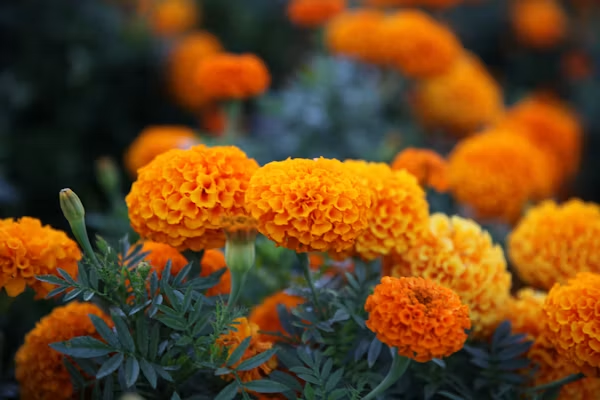
The Marigold: History, Biology, and Global Culture
The marigold (Tagetes) is a genus of annual and perennial herbaceous plants in the sunflower family, Asteraceae. Famous for its pungent aroma, fiery golden-orange blossoms, and exceptional pest-repelling properties, the marigold plays a central role in organic agriculture, global festivals, traditional medicine, and natural dye production.The marigold (Tagetes) is a genus of annual and perennial herbaceous plants in the sunflower family, Asteraceae. Famous for its pungent aroma, fiery golden-orange blossoms, and exceptional pest-repelling properties, the marigold plays a central role in organic agriculture, global festivals, traditional medicine, and natural dye production.
1. History and Cultural Significance
1. History and Cultural Significance
Mesoamerican Origins: Marigolds are native to the Americas, extending from the southwestern United States down through Central and South America, with the highest concentration of species in Mexico. The Aztecs cultivated marigolds (cempasúchil) as sacred flowers, associating their brilliant color and scent with the sun and using them in religious ceremonies, healing rituals, and natural dyes.
The Flower of the Dead (Día de Muertos): In Mexican culture, the marigold remains the iconic flower of Día de Muertos (Day of the Dead). It is believed that the flower's vibrant color and pungent fragrance guide the spirits of departed ancestors back to their family altars (ofrendas).
Global Spread & South Asian Traditions: Spanish and Portuguese explorers carried marigold seeds across the Atlantic to Europe, Africa, and Asia during the 16th century. In South Asia—particularly India and Bangladesh—marigolds became deeply woven into cultural life. Known locally as Genda, marigolds are harvested in massive quantities for wedding garlands, temple offerings, and major festivals such as Diwali, symbolizing prosperity and sacred purity.
2. Botanical Structure & Companion Gardening
Composite Bloom Structure: Like other members of Asteraceae, a marigold flower head is composed of multiple florets. Cultivated varieties are usually "double-flowered," packed with hundreds of layered ray florets that form dense, pom-pom-like globes.
NematodeProtection & Chemical Defense: Marigold roots exude a natural chemical compound called alpha-terthienyl. This substance is highly toxic to root-knot nematodes (microscopic soil pests), making marigolds a prized companion plant in organic vegetable gardens when interplanted alongside tomatoes, eggplants, and peppers.
Lutein & PoultryFeed: Marigold petals are extremely rich in lutein, a powerful carotenoid antioxidant. In commercial agriculture, marigold extracts are added to poultry feed to naturally enhance the golden yellow color of egg yolks and chicken skin.
3. Key Species and Cultivars
Horticulturists recognize several primary species within the Tagetes genus:
African Marigold (Tagetes erecta): Despite the common name, this species originated in Mexico. It produces large, globe-shaped blooms (up to 4–5 inches across) on tall stems (up to 3 feet high) in shades of bright yellow, gold, and deep orange.
French Marigold (Tagetes patula): Compact, bushy plants (6–12 inches tall) featuring smaller, multi-colored flowers often bi-colored with mahogany red, bronze, and yellow. They are especially effective at pest deterrence.
Signet Marigold (Tagetes tenuifolia): Features delicate, fern-like foliage and single, 5-petaled edible blooms with a distinct citrusy flavor, frequently used as edible garnishes in salads.
Pot Marigold (Calendula officinalis): Although widely called "marigold," Calendula belongs to a different genus within the Asteraceae family. It is prized for soothing skin balms, herbal teas, and medicinal salves.
4. Global Locations and Ideal Conditions
Climate Requirements: Marigolds are sun-loving plants that thrive in warm, temperate to tropical climates. They require full sunlight (at least 6 hours of direct sun daily) to bloom abundantly.
Soil & Maintenance: Extremely resilient and low-maintenance, marigolds grow well in moderately fertile, well-draining soil. They are heat-tolerant and drought-resistant once established, though spent flowers should be regularly "deadheaded" to encourage continuous blooming from spring until early winter frosts.