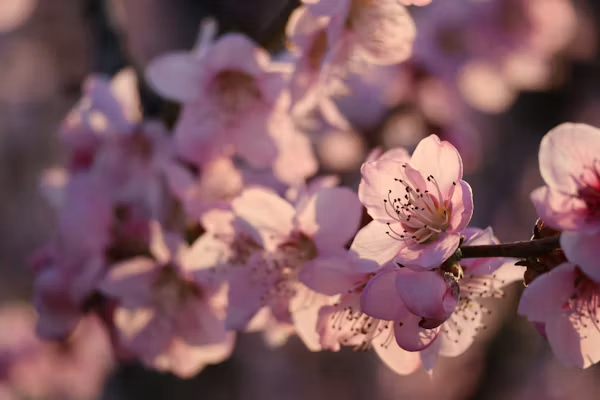
Cherry Blossom
The Cherry Blossom: History, Biology, and Global Culture
The cherry blossom (Sakura), belonging to the genus Prunus within the rose family (Rosaceae), is a renowned spring-flowering tree celebrated for its clouds of delicate pink and white blossoms. Revered across global cultures—most famously in Japan—cherry blossoms hold deep cultural, artistic, and ecological significance as a symbol of renewal, hope, and the impermanent nature of life.
1. History and Cultural Significance
Ancient Origins & East Asian Traditions: Native to East Asia—including Japan, China, and Korea—wild cherry species have grown across temperate mountain regions for millennia. In ancient Japan (Heian period, 794–1185 CE), the custom of Hanami (flower viewing) shifted focus from plum blossoms to cherry blossoms, evolving from imperial court celebrations into a nationwide cultural tradition.
Philosophical Symbolism (Mono no Aware): In Japanese culture, the fleeting lifespan of sakura blooms—which peak for only a week before scattering like snow—embodies the Buddhist concept of mono no aware, a gentle sadness at the impermanence of all living things. Historically, sakura was adopted by samurai as a emblem of a short but honorable life.
Diplomatic Gifts & Global Festivals: In 1912, the mayor of Tokyo gifted 3,000 cherry trees to Washington, D.C. as a gesture of international friendship, creating the iconic bloom display around the Tidal Basin that hosts the annual National Cherry Blossom Festival.
2. Botanical Anatomy & Synchronized Blooming
Five-Petaled & Double Floral Structure: Single wild blossoms feature five distinct petals with notched tips, a signature trait of the Prunus genus. Selective breeding has produced "double-flowered" varieties (Yaezakura) containing 10 to over 50 overlapping petals per bloom.
Synchronized Spring Emergence: Ornamental cherry trees are deciduous and produce flower buds before foliage emerges in early spring. Blooming relies on vernalization—a continuous stretch of winter chilling temperatures followed by warm spring days, which triggers a synchronized bloom across entire regions.
Brief Flowering Window: Once a tree reaches full bloom (mankai), the blossoms remain at peak beauty for approximately 4 to 7 days before wind and rain cause the petals (sakurafubuki) to fall, yielding to tender green leaves (hazakura).
3. Key Species and Cultivars
While dozens of wild species exist, ornamental horticulture focuses heavily on selected cultivars:
Somei-Yoshino (Prunus × yedoensis): The quintessential modern Japanese cherry tree, accounting for over 70% of planted cherry trees in Japan. It features nearly white petals with a faint pink core and is cloned via grafting, ensuring identical blooming timelines.
Yamazakura (Prunus jamasakura): A wild species native to Japan's mountains, producing soft pink flowers simultaneously with reddish-bronze young leaves.
Kanzan (Prunus 'Kanzan'): A popular double-flowered cultivar with deep pink, multi-petaled blossoms (up to 20–50 petals per bloom) and exceptional cold hardiness.
Weeping Cherry (Prunus pendula / Shidarezakura): Features cascading, pendulum-like branches that produce waterfalls of pink and white flowers.
4. Global Locations and Ideal Conditions
Climate Requirements: Cherry trees thrive in temperate zones (USDA Zones 5–8) with distinct winter and spring seasons. They require full sun exposure (at least 6 hours of direct sunlight daily) for dense floral bud formation.
Soil & Moisture: Prefer fertile, moist, organic-rich, well-draining soil with a neutral to slightly acidic pH. Wet, waterlogged conditions cause root rot and fungal diseases like black knot or leaf curl.
Primary Viewing Regions: Beyond Japan—where the annual "Cherry Blossom Front" (sakurazensen) is tracked daily by meteorologists—famous blooming locations include Washington, D.C., and Macon, Georgia (USA), Vancouver (Canada), Bonn (Germany), and Wuhan (China).