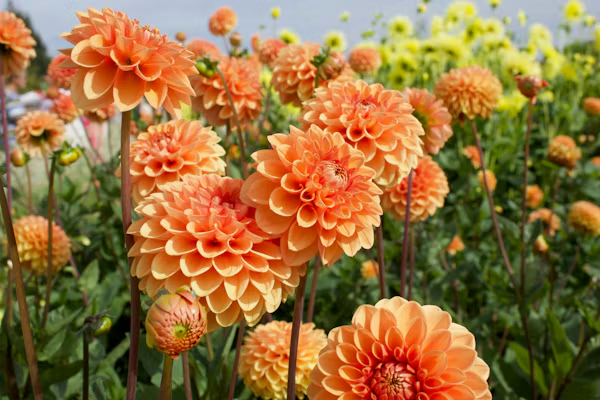
The Dahlia: History, Biology, and Botanical Diversity
The dahlia (Dahlia) is a genus of bushy, tuberous, herbaceous perennial plants native to Mexico and Central America. A member of the sunflower family (Asteraceae), the dahlia is celebrated worldwide for its breathtaking structural variety, intricate geometric symmetry, and extensive color spectrum ranging from soft pastels to near-black burgundy.
1. History and Cultural Significance
Mesoamerican Roots: Native to the high-altitude regions of Mexico and Guatemala, wild dahlias were cultivated by the Aztecs. Known in the Nahuatl language as Acocotli ("water canes"), the hollow stems were used as water pipes, while the starchy root tubers were harvested as a food source and medicinal treatment for epilepsy.
European Introduction: In 1789, seeds were sent from the Royal Botanical Garden of Madrid to botanists in Spain. The genus was officially named Dahlia in honor of the Swedish botanist Anders Dahl, a pupil of Carl Linnaeus.
The National Flower of Mexico: In 1963, the dahlia was declared the national flower of Mexico, reflecting its deep historical ties to Indigenous culture, regional biodiversity, and national heritage.
2. Botanical Structure & Octoploid Genetics
Tuberous Root System: Dahlias do not grow from true bulbs, but from fleshy underground root tubers. These tubers store carbohydrates and moisture during winter dormancy, allowing the plant to shoot up rapidly as soil temperatures warm in spring.
Complex Octoploid Genetics: Dahlias possess an unusual genetic composition—they are octoploids, meaning they have eight sets of chromosomes rather than two. This extraordinary genetic variation allows breeders to continually produce vast structural diversity, varying bloom patterns, and intricate color variations from seed.
Flower Morphology: Like other members of Asteraceae, a dahlia head is a composite structure of ray florets (petals) surrounding central disc florets.
3. Key Categories and Structural Classifications
The American Dahlia Society (ADS) and international floricultural organizations classify dahlias into over 10 official structural categories based on size and petal arrangement:
Decorative Dahlias: Feature broad, flat or slightly rolled petals with no central disc exposed.
Dinner-Plate Dahlias: Informal cultivars bred specifically for size, producing massive heads spanning 10 to 12 inches (25–30 cm) in diameter.
Single & Anemone: Feature one or two outer rings of flat petals surrounding a prominent central disc.
4. Global Locations and Ideal Conditions
Climate Requirements: Dahlias thrive in warm, temperate conditions with full sun exposure (at least 6 to 8 hours daily). They are sensitive to frost and cannot survive freezing ground temperatures.
Soil & Winter Storage: Prefers rich, fertile, well-draining soil with an abundance of organic matter. In regions with freezing winters (USDA Zones 7 and below), gardeners dig up the tubers after the first autumn frost and store them indoors in a cool, dry place until spring.
Cultivation Hubs: Beyond its native Mexico, major commercial cultivation and breeding centers exist across the Netherlands, the Pacific Northwest (USA), New Zealand, and the United Kingdom.