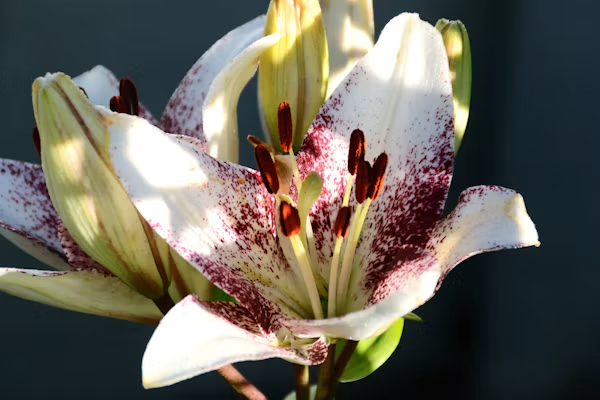
True lilies comprise the genus Lilium, belonging to the family Liliaceae. Revered across civilizations for their striking trumpet- or star-shaped blossoms, intense fragrances, and dramatic stature, lilies hold a prominent position in global culture, art, and commercial floriculture.
1. History and Cultural Significance
Ancient Origins: True lilies are ancient plants native to temperate regions of the Northern Hemisphere. Archeological discoveries, including Minoan frescoes in Crete dating back to 1580 BCE, depict white lilies (Lilium candidum, or the Madonna Lily) as sacred symbols of grace and divine purity.
Classical and Religious Reverence: In Greek mythology, the lily was associated with Hera, queen of the gods. Later, in Christian tradition, the white lily became an iconic symbol of the Virgin Mary, representing purity, innocence, and rebirth, frequently appearing in Renaissance Annunciation paintings.
Asian Tradition and Culinary Use: In China, Eastern Asia, and Japan, lilies have been cultivated for over 1,000 years not only for ornament but also for food and traditional medicine. The starchy, edible bulbs of species like Lilium lancifolium (Tiger Lily) continue to be harvested for traditional soups and culinary dishes.
2. Botanical Structure & Growth Mechanics
Scaly Underground Bulbs: Unlike tulips or onions, true lily bulbs lack a protective outer skin (tunic). Instead, they are composed of fleshy, overlapping scales that store nutrients and moisture, making them sensitive to drying out or waterlogging.
True Lilies vs. Impostors: Many popular plants carry "lily" in their common names but belong to entirely different botanical families. Daylilies (Hemerocallis), Calla lilies (Zantedeschia), Peace lilies (Spathiphyllum), and Water lilies (Nymphaea) are not true lilies. True lilies always grow from true scaly bulbs along an unbranched leafy stem.
Flower Structure: A lily bloom consists of six prominent tepals (three outer sepals and three inner petals that match in appearance). At the center stand six long stamens topped with heavy, pollen-laden anthers, surrounding a central pistil.
3. Key Categories and Hybrid Groups
Horticulturists classify cultivated lilies into several major divisions, primarily derived from wild Asiatic and Oriental species:
Asiatic Hybrids: Known for early-summer blooming, sturdy stems, and vibrant colors (yellow, orange, red, pink, white). They are mostly unscented and very easy to cultivate.
Oriental Hybrids: Famous for massive, bowl- or trumpet-shaped flowers, ruffled edges, and deeply intoxicating fragrances. The iconic 'Stargazer' lily, featuring crimson-pink petals edged in white, is a famous Oriental hybrid.
Trumpet & Aurelian Hybrids: Tall, majestic lilies producing long, fragrant, trumpet-shaped blooms that face outward or downward.
LA & OT Interdivisional Hybrids: Modern breeding breakthroughs combining traits:
LA Hybrids (Longiflorum × Asiatic): Larger blooms with subtle scent and strong stems.
Native Range: True lilies are distributed natively across temperate zones of North America, Europe, and Asia (with East Asia hosting the highest species concentration).
Soil & Climate Requirements: Lilies require cool, moist, organic-rich soil that drains exceptionally well. A classic horticultural rule for lilies is "heads in the sun, feet in the shade"—they need full sun to partial light for their blooms, while low groundcovers or mulch protect their shallow roots from excessive heat.
Important Toxicity Note: All parts of true lilies (Lilium genus) are extremely toxic to cats. Ingestion of even minute amounts of pollen, leaves, or flower petals can trigger severe acute kidney failure in felines.