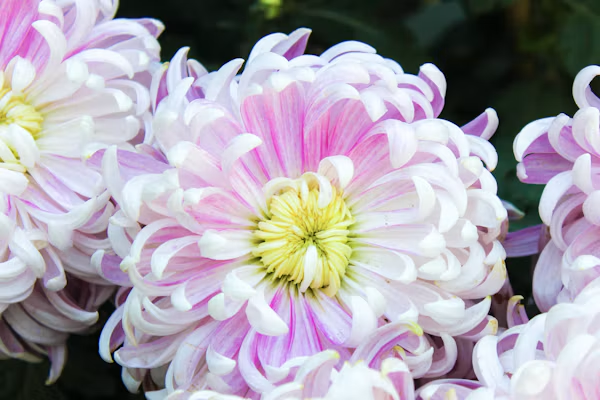
The Chrysanthemum: History, Biology, and Cultural Legacy
The chrysanthemum (Chrysanthemum), commonly referred to as the "mum," is a genus of flowering plants in the family Asteraceae. Celebrated for its intricate petal arrangements, vivid seasonal color palette, and deep historical symbolism, the chrysanthemum stands alongside the orchid, bamboo, and plum blossom as one of the most culturally revered flowers in East Asia and a cornerstone of global autumn horticulture.
1. History and Cultural Significance
Ancient Chinese Cultivation: Chrysanthemums were first cultivated in China as early as the 15th century BCE as an herbal plant. The boiled roots were used as headache remedies, sprouts were eaten as salad greens, and dried petals were brewed into tea. In traditional Chinese art and philosophy, the chrysanthemum symbolizes resilience, longevity, and noble solitude because it blooms in cold autumn when other flowers wither.
Imperial Symbol in Japan: Introduced to Japan in the 8th century (Nara period), the flower captured royal fascination. The Japanese Imperial Family adopted a 16-petaled chrysanthemum as the official Imperial Seal of Japan (the Chrysanthemum Throne), and the flower remains featured on Japanese passports today.
Western Arrival & Adaptations: Chrysanthemums were brought to Europe in the 17th century and North America in the 18th century. In Western cultures, their symbolism varies: while in the US they are associated with joy, autumn harvests, and cheerfulness, in several European countries (such as France, Italy, and Poland) they are traditional funeral flowers symbolizing grief and remembrance.
2. Botanical Structure & Photoperiodic Blooming
Composite Head Structure: Like daisies and sunflowers, a chrysanthemum bloom is a composite head (capitulum) composed of two types of florets:
Ray Florets: The showy outer "petals" that determine the visual form and color of the blossom.
Disc Florets: The smaller, tubular florets clustered at the center, capable of producing seed.
Short-Day Flowering (Photoperiodism): Chrysanthemums are classic short-day plants. They trigger flower bud development when the continuous dark period at night exceeds 12 hours (typically late summer and autumn). Commercial florists manipulate daylight length using black blackout curtains in greenhouses to produce blooming mums year-round.
Natural Insecticide Source: Certain species, particularly Chrysanthemum cinerariifolium (Pyrethrum), produce pyrethrins—natural compounds that attack the nervous system of insects. Pyrethrins are widely harvested for eco-friendly, biodegradable insecticides.
3. Key Categories and Structural Forms
Horticulturists classify thousands of hybrid varieties into 13 official bloom forms based on petal direction and arrangement:
Incurve & Reflexed:
Incurve: Petals curve inward and upward toward the center, forming a smooth, spherical ball.
Reflexed: Petals sweep downward and outward away from the center, creating an overlapping, feathered effect.
Spider Mums: Feature long, delicate, tube-like ray florets with hooked or coiled ends that spray outward like spider legs.
Pompon Mums: Compact, small, dense spherical heads, often used in commercial floral sprays.
Anemone & Daisy Single: Display a prominent central disc surrounded by one or two outer rows of flat ray petals.
4. Global Distribution and Cultivation
Climate Requirements: Mums thrive in temperate zones worldwide, preferring full sun exposure (at least 5–6 hours daily) and rich, fertile, well-draining soil with a pH around 6.5.
Garden Care & Pinching: To achieve dense, bushy plants packed with autumn blooms, gardeners "pinch" back growing stem tips repeatedly in late spring and early summer to force lateral branching.
Major Producers: China and Japan remain primary hubs for ornamental collection and breeding, while the Netherlands, Colombia, and Kenya lead international commercial cut-flower production.