The Jasmine: History, Biology, and Global Fragrance Legacy
Jasmine (Jasminum) is a genus of shrubs and vines in the olive family, Oleaceae. Comprising around 200 species native to tropical and warm temperate regions, jasmine is globally celebrated for its delicate star-shaped blossoms and intoxicating, highly fragrant essential oils that form the heart of fine perfumery, traditional teas, and sacred cultural rituals.
1. History and Cultural Significance
Asian and Middle Eastern Origins: Jasmine is native to tropical and subtropical regions of Asia, Africa, and Australia. Cultivated for thousands of years in ancient Persia, India, and China, it was prized along trade routes as a symbol of nobility, divine grace, and spiritual purity.
National Symbolism: Jasmine holds deep cultural significance across Asia. Jasminum sambac (Arabian Jasmine) is the national flower of Indonesia (where it is known as Melati putih) and the Philippines (known as Sampaguita). In Pakistan, Jasminum officinale (Common Jasmine) serves as the national flower.
Spiritual and Ceremonial Uses: Across South Asia—particularly in Bangladesh, India, and Thailand—jasmine blossoms are woven into intricate garlands for wedding ceremonies, religious offerings, and decorative hair adornments (gajras), symbolizing love, fortune, and sacred devotion.
2. Botanical Structure & Night-Blooming Fragrance
Growth Habit: Jasmine typically grows as an evergreen or deciduous climbing vine or sprawling shrub, reaching height or length depending on support. The foliage consists of glossy, dark green leaves arranged oppositely or alternately along slender stems.
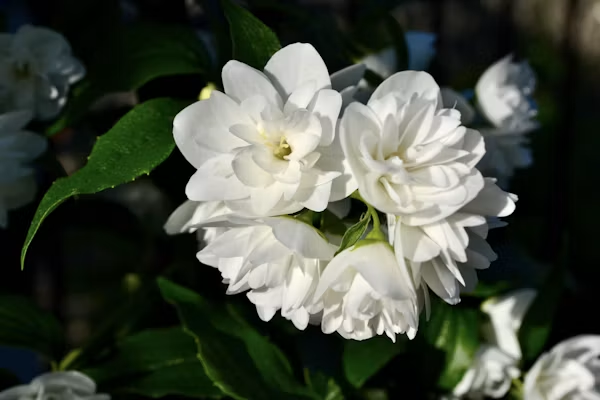
Flower Morphology: The blossoms feature a tubular calyx opening into 4 to 9 spreading, pinwheel-like petals. While most species produce pure white flowers, some species bear pale yellow or pinkish blooms.
Aromatic Chemistry & Night Release: Many jasmine species release their strongest fragrance after dusk as temperatures drop. The sweet, rich scent is produced by volatile organic compounds, including benzyl acetate, linalool, and indole. Indole gives high-grade jasmine oil its warm, deep, and sensual undertones.
3. Key Species and Cultivars
While the genus contains scores of wild plants, commercial cultivation focuses primarily on a few species:
Common Jasmine (Jasminum officinale): The traditional poet's jasmine native to the Caucasus and Asia. Famous for intense fragrance and hardiness in temperate gardens, it is heavily cultivated in southern Europe for commercial fragrance extraction.
Arabian Jasmine (Jasminum sambac): A bushy shrub with highly scented, waxy white flowers that turn pinkish as they age.
Grand Duke of Tuscany: A popular double-flowered cultivar featuring dense, rose-like floral structures.
'Motiya' / 'Bela': Widely grown in South Asia for scenting green tea and crafting fresh floral garlands.
Royal / Spanish Jasmine (Jasminum grandiflorum): Widely cultivated in Grasse, France—the historic perfume capital of the world—for steam distillation and solvent extraction in luxury perfumes.
Winter Jasmine (Jasminum nudiflorum): A non-fragrant species that produces vibrant yellow blossoms on leafless green stems during late winter and early spring.
4. Global Locations and Cultivation Needs
Climatic Requirements: Jasmine thrives in warm, frost-free, humid climates with full sun to light partial shade. It requires at least 4–6 hours of bright sunlight daily to set dense flower buds.
Harvesting for Oils and Tea: In major production centers like India, Egypt, France, and China, jasmine blossoms are hand-picked at pre-dawn hours before the sun dissipates the volatile oils. For jasmine green tea, fresh blossoms are layered over tea leaves overnight so the leaves absorb the natural floral aroma.