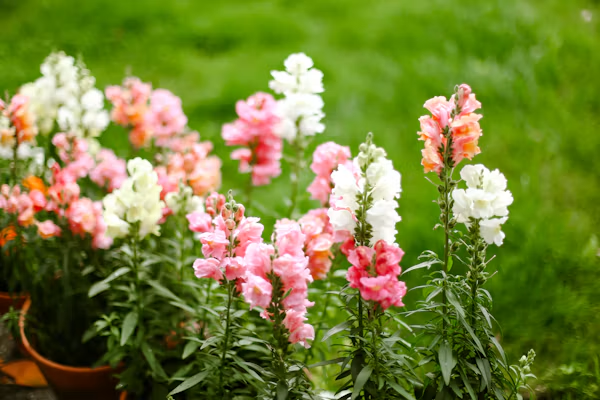
The Snapdragon: History, Biology, and Botanical Diversity
The snapdragon (Antirrhinum majus) is a classic flowering plant in the plantain family, Plantaginaceae (formerly categorized under Scrophulariaceae). Famous for its unique dragon-head-shaped blossoms that "snap" open when squeezed, the snapdragon is a beloved staple of temperate gardens, cottage landscapes, and commercial cut-flower production.
1. History and Cultural Significance
Mediterranean Origins: Native to the rocky slopes and coastal regions of the Mediterranean, particularly southern Europe and North Africa, snapdragons have been cultivated since ancient Greek and Roman times.
Etymology & Folklore: The genus name Antirrhinum stems from the Greek words anti ("like") and rhin ("nose" or "snout"), referring to the flower's distinct snout-like appearance. In European folklore, snapdragons were believed to possess protective properties against witchcraft, illusions, and curses when worn or planted around homes.
Symbolism: In the Victorian language of flowers, snapdragons held a complex double meaning: they symbolized both grace and strength under pressure, as well as deception or prescience.
2. Botanical Anatomy & Specialized Pollination
Biparental "Snap" Mechanism: The defining feature of the snapdragon blossom is its bilabiate (two-lipped) corolla. The upper lip consists of two fused petals, while the lower lip features three fused petals forming a closed palate. The flower requires a specific weight and force to push open the lower lip, making it specifically co-evolved for heavy pollinators like bumblebees, which land on the lip, force their way inside to access nectar, and inadvertently collect or deposit pollen.
Growth Structure: Snapdragons grow as erect herbaceous plants producing dense, vertical terminal racemes (spikes) packed with buds that open sequentially from the bottom of the stem to the top.
Model Genetic System: Antirrhinum majus has long served as a key model organism in plant genetics and evolutionary biology. Gregor Mendel and subsequent scientists used snapdragons to study incomplete dominance, transposons, and floral symmetry genes.
3. Key Varieties and Structural Classifications
Horticulturists and commercial florists classify snapdragons into distinct height tiers and flower forms:
Tall / Rocket Types (2.5–3 feet): Bred specifically for cut-flower production and background garden borders. Popular series include 'Rocket' and 'Madame Butterfly'.
Intermediate Types (1.5–2 feet): Sturdy, bushy plants ideal for mid-border planting and garden beds, such as the 'Sonnet' and 'Liberty' series.
Dwarf / Bedding Types (6–12 inches): Compact, mounding plants widely used for edging, containers, and window boxes, including the 'Montego' and 'Floral Showers' series.
Open-Faced & Double Forms: Modern breeding breakthrough cultivars, such as 'Aztec' or 'Chanel', feature open, trumpet-shaped petals or double petals ("azalea-flowered") that lack the traditional closing snap mechanism.
4. Global Locations and Growing Conditions
Climate Requirements: Snapdragons are cool-season annuals (or short-lived perennials in USDA Zones 7–10) that thrive in spring and autumn. They prefer full sun to light partial shade (at least 6 hours of daily direct sunlight).
Temperature & Soil: They tolerate light spring frosts and cool night temperatures (40–50°F / 4–10°C), but often pause bloom production during high summer heat. They require well-draining, fertile soil rich in organic matter to prevent root and crown rot.