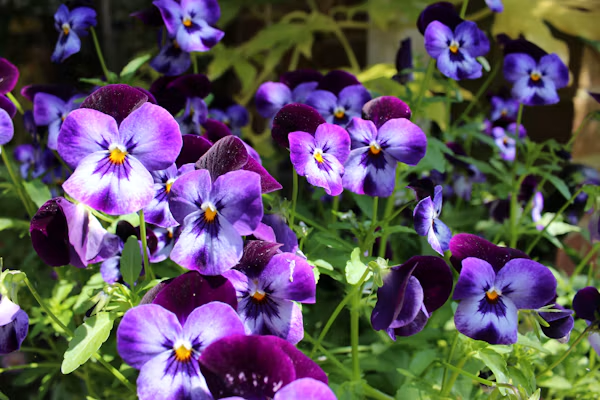
The Pansy: History, Biology, and Botanical Heritage
The pansy (Viola × wittrockiana) is a large-flowered hybrid plant in the violet family, Violaceae. Celebrated for its unique "face-like" blotched petal patterns, rich color spectrum, and extraordinary cold hardiness, the pansy is one of the most popular cool-season garden flowers across temperate regions globally.
1. History and Cultural Significance
European Origins: The modern garden pansy is a cultivated hybrid derived from wild European species, primarily Viola tricolor (Johnny Jump-up), Viola lutea, and Viola altaica. Selective hybridization began in the early 19th century under Lord Gambier and his gardener William Thompson in Buckinghamshire, England.
Etymology & Symbolism: The name "pansy" originates from the French word pensée, meaning "thought" or "remembrance." In the Victorian language of flowers, gifting a pansy signaled thoughtful affection or loving remembrance. In literature, pansies feature prominently in Shakespeare's A Midsummer Night's Dream, where the juice of the pansy ("love-in-idleness") serves as a magical love potion.
2. Botanical Anatomy & Cold Adaptation
Five-Petaled Flower Structure: A pansy bloom features five distinct, overlapping petals: two top petals, two side petals, and a lower broad petal that includes a small spur at its base containing nectar.
DistinctMarkings: Pansy flowers generally exhibit one of two facial patterns:
Clear / Pure: Solid-colored petals without contrasting centers.
Blotched / Face: Features a prominent dark purple or black central zone ("mask") on the lower three petals, evolved to act as a visual nectar guide for pollinating insects.
Extreme Cold Tolerance: Pansies possess remarkable physiological freeze-tolerance. During freezing winter conditions, their cellular fluids adapt to prevent tissue damage; while plants may wilt and lay flat under snow, they recover rapidly and resume active flowering as temperatures rise above freezing in spring.
3. Key Categories and Commercial Types
Commercial breeders categorize hybrid pansies into several primary series based on flower size, growth habit, and heat tolerance:
Large-Flowered / Majestic Types: Produce massive individual blooms spanning 3 to 4 inches (7–10 cm) across, popular for high-impact spring and autumn display beds (e.g., 'Majestic Giants' and 'Delta' series).
Medium / Standard Types: Compact, floriferous plants that produce an abundance of medium-sized blooms (2–3 inches), offering superior weather and rain resistance (e.g., 'Matrix' and 'Crown' series).
Trailing / Spreading Types: Bred specifically for hanging baskets and groundcovers, producing long branches covered in small to medium blooms (e.g., 'Cool Wave' series).
Violas vs. Pansies: While closely related, true violas (Viola cornuta) produce smaller, more numerous blooms with greater heat resistance compared to the larger-flowered pansies.
4. Global Locations and Growing Conditions
Climate Requirements: Pansies thrive in cool, sunny to lightly shaded environments. They grow best in temperatures ranging from 40°F to 65°F (4°C–18°C).
Soil & Care: Prefers moist, fertile, organic-rich, well-draining soil with a slightly acidic pH (5.4–5.8). High soil pH above 6.2 can cause iron deficiency and yellowing foliage (chlorosis). Regular deadheading of faded blooms prolongs the flowering display throughout spring and autumn.