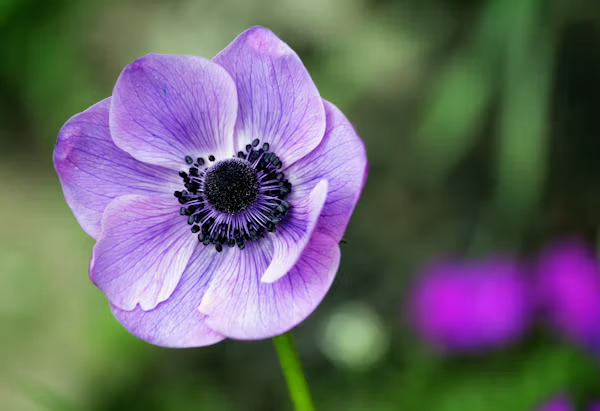
The Anemone: History, Biology, and Botanical Diversity
The anemone (Anemone), commonly known as the windflower, is a genus of over 200 species of perennial flowering plants in the buttercup family, Ranunculaceae. Revered for its papery, saucer-shaped blossoms and distinctive dark central button, the anemone spans low-growing woodland carpet plants, vibrant Mediterranean cut flowers, and tall autumn-blooming garden perennials.
1. History and Cultural Significance
Etymology & Windflower Lore: The name Anemone originates from the Greek word anemos ("wind") and the suffix -one ("daughter of"), translating to "daughter of the wind". According to folklore, the delicate blossoms were believed to open only when the wind blew.
Classical Mythology: In Greek mythology, the red anemone emerged from the tears of Aphrodite mixed with the blood of her fallen lover, Adonis, tying the flower to themes of deep affection, grief, and fragile life.
Historical Symbolism: In ancient Rome, anemones were gathered as protective charms to ward off fevers. Conversely, in ancient Egyptian, Chinese, and medieval European traditions, they were occasionally associated with ill health due to their dark-centered contrast. In Victorian floriography, gifting an anemone signaled anticipation or forsaken love.
2. Botanical Structure & Phototropic Behavior
Lack of True Petals (Tepals): Most anemone species do not possess true petals. Instead, their showy outer flower envelope is composed of colorful sepals (ranging from 4 to over 27) that function visually like petals.
Distinctive Central Eye: The core of the flower features a dense, raised mound of pistils ringed by numerous dark blue, purple, or black pollen-bearing stamens, creating a striking central button.
Temperature & Light Sensitivity (Nyctinasty): Anemones exhibit nyctinastic movement—opening wide in warm sunlight during the day to invite pollinators and closing their sepals tightly at night or during cold, rain-heavy weather to protect delicate reproductive organs.
Toxicity Defense: Like many members of the Ranunculaceae family, all parts of the anemone plant contain protoanemonin, a natural chemical defense mechanism that makes them toxic if ingested and mildly irritating to skin, rendering them naturally deer- and rabbit-resistant.
3. Key Categories and Seasonal Groups
Horticulturists classify anemone varieties into three primary seasonal and structural categories:
Spring Woodland Species (e.g., Anemone nemorosa, Anemone blanda): Low-growing geophytes native to European forests. They emerge in late winter to early spring from creeping rhizomes or tubers, carpet the forest floor before tree canopies leaf out, and go dormant by early summer.
Mediterranean / Florist Types (Anemone coronaria): Known as the poppy anemone, this tender tuberous species features saturated colors (scarlet, violet, blue, pink, and pure white).
'De Caen' Group: Single-flowered cultivars with silky sepals surrounding a black core.
'St. Brigid' Group: Semi-double and double-flowered forms with multiple layers of ruffled sepals.
Japanese / Fall-Blooming Types (Anemone hupehensis / Anemone× hybrida): Fibrous-rooted, tall perennials (2 to 5 feet high) native to China. They bloom from late summer through late autumn with single or semi-double pink and white blossoms, extending garden color after most summer plants fade.
4. Global Distribution and Cultivation Needs
Native Range: Anemones are native across temperate and subtropical zones of North America, Europe, Asia, and northern Africa.
Growing Requirements:
Light: Spring woodland and Japanese varieties prefer partial or dappled shade. Mediterranean species (A. coronaria) thrive in full sun with high light levels.
Soil & Moisture: Require moist, organic-rich, well-draining soil with neutral to slightly acidic pH. Wet, waterlogged winter soil causes tuberous roots to rot rapidly.